Somerset eSTEP passes 25,000 completed plans in first year
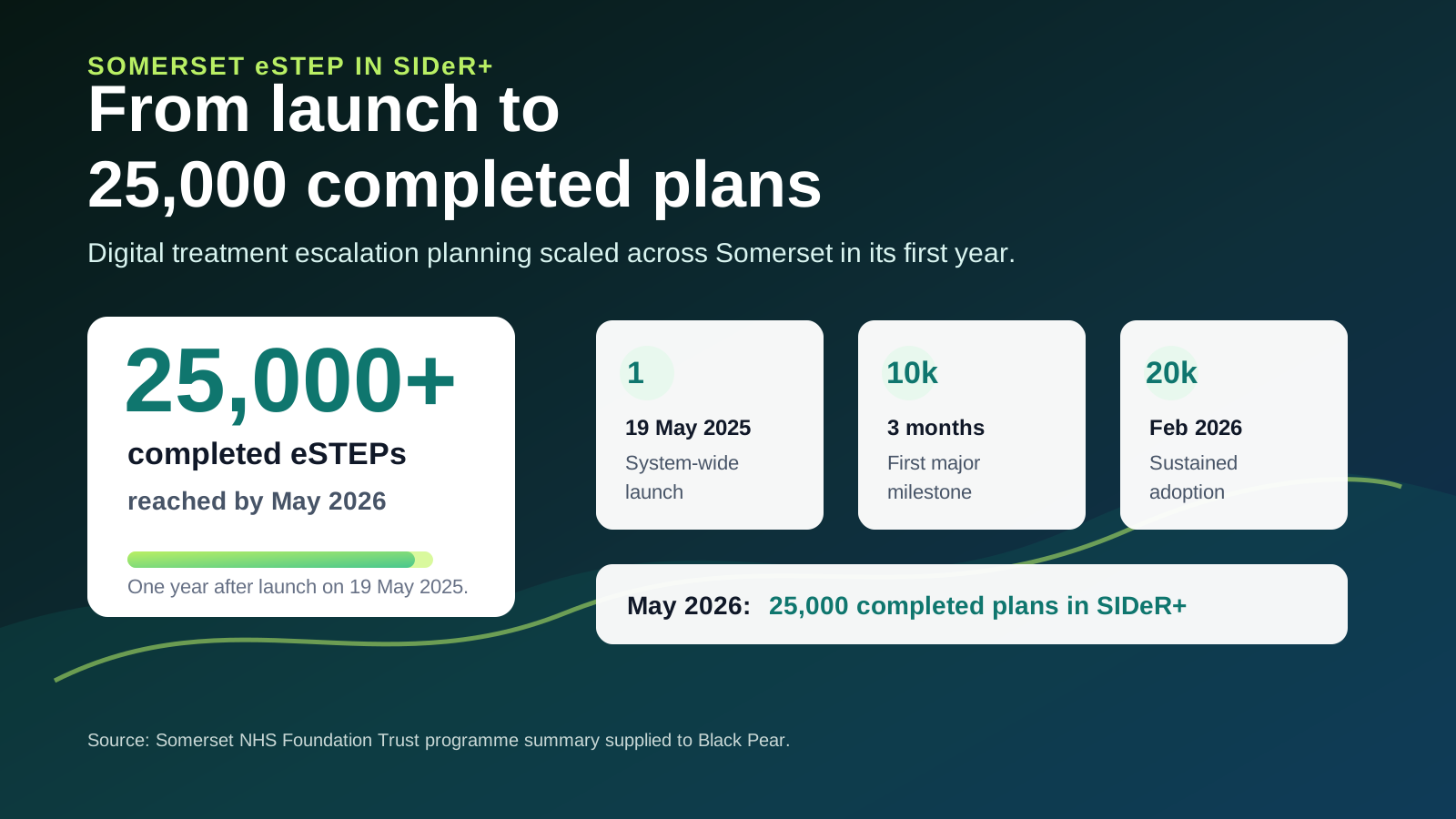
Somerset NHS Foundation Trust's digital treatment escalation planning programme has passed more than 25,000 completed eSTEPs within twelve months of launch, marking a major milestone for personalised care documentation across the county.
The electronic Somerset Treatment Escalation Plan, known as eSTEP, went live in SIDeR+ on 19 May 2025. It was designed to move treatment escalation planning away from fragmented paper processes and into a shared digital workflow available across acute, community, mental health, hospice, rapid response and primary care settings.
By May 2026, the programme had reached more than 25,000 completed plans, expanded the SIDeR+ eForms portfolio, established formal governance and gained regional and national recognition.
A rapid first-year adoption curve
Three months after launch, eSTEP reached its first major milestone: more than 10,000 plans created within SIDeR+. Adoption continued to accelerate, reaching 20,000 completed eSTEPs by February 2026 and 25,000 by May 2026.
That first-year usage gives Somerset a substantial dataset for understanding adoption, quality and consistency across services. Repeated data reviews in October 2025, February 2026 and June 2026 enabled the programme team to monitor variation and support targeted improvement.
The 2025 inpatient eSTEP audit also showed improvement across the majority of audited measures, providing further evidence that the programme was not only increasing volume, but strengthening consistency and quality.
A launch across the care system
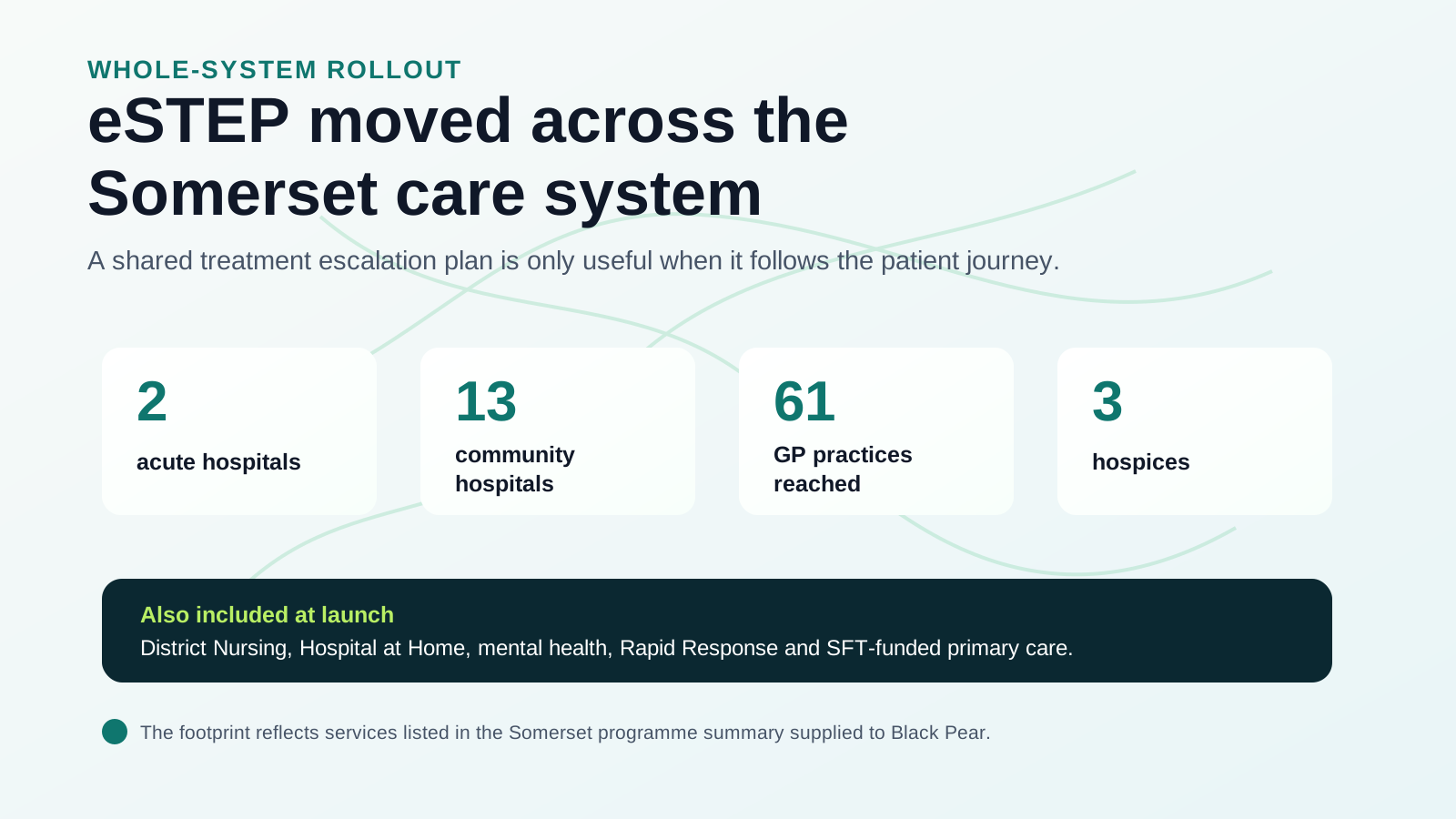
Somerset formally launched eSTEP across a wide clinical footprint:
- Two acute hospitals.
- Thirteen community hospitals.
- District Nursing services.
- Hospital at Home teams.
- Community and inpatient mental health services.
- Three hospices.
- Rapid Response services.
- SFT-funded primary care colleagues.
The scale of the launch mattered. A treatment escalation plan only has real operational value if it can travel with the patient journey. By making eSTEP part of SIDeR+, Somerset created a shared digital route for care teams to record, view and use important personalised care information across services.
The challenge: making plans visible where decisions are made
Treatment escalation planning and personalised care documentation are core parts of high-quality care. In practice, paper-based processes can make them hard to access, hard to share and difficult to use consistently across organisational boundaries.
For a system such as Somerset, the challenge was not only to create a digital document. It was to make the plan available to the clinicians who need it, in the places where care decisions are made.
Somerset NHS Foundation Trust set out to improve:
- Access to treatment escalation planning information.
- Support for clinical decision-making.
- Information sharing between organisations and services.
- Consistency in personalised care planning across the integrated care system.
- The ability to learn from data and improve quality over time.
The programme also recognised that technology alone does not create adoption. The launch was supported by stakeholder engagement, clinical ownership, training, service-level communication and a commitment to continuous improvement based on user feedback and data.
From one form to a broader personalised care portfolio
The initial success of eSTEP quickly generated demand for further digital personalised care documentation within SIDeR+.
In July 2025, Somerset launched a digital Advance Decision to Refuse Treatment form in SIDeR+. The programme described this as a significant milestone for legally binding personalised care documentation within the platform.
The Carer Sub-Cut Injection Credentials form was also introduced, enabling information to be written back into both GP records and SystmOne. That reduced duplication and strengthened interoperability between care settings.
Somerset also redesigned and relaunched the Advance Care Plan in an enhanced digital format, improving usability and supporting more effective personalised care conversations.
In March 2026, the electronic Comprehensive Assessment Form was substantially revised to align more closely with the national Comprehensive Geriatric Assessment framework. This helped support more consistent holistic assessment and documentation.
Together, these developments show how a successful shared care record deployment can become a platform for broader clinical improvement, not just a repository for information.
Taking the programme beyond secondary care
A defining feature of the programme has been its focus on adoption beyond hospital settings.
From October 2025, Somerset delivered a programme of eForm roadshows across all 61 Somerset GP practices, with additional sessions in neighbouring Devon and Dorset. These sessions helped demonstrate the benefits of eSTEP and the wider SIDeR+ eForms suite, address barriers to adoption and strengthen relationships across organisational boundaries.
That engagement is central to the long-term value of shared care records. Interoperability succeeds when it becomes part of the working relationship between services, not only a technical connection between systems.
Governance for sustainable growth
As adoption grew, Somerset introduced formal governance to support quality, sustainability and future development.
In April 2026, the eSTEP Governance Group was established, bringing together representatives from key stakeholder organisations and services across the system. Its first meeting took place in May 2026, with terms of reference developed and quarterly meetings agreed.
That governance model provides a route for continued oversight of development priorities, quality assurance, stakeholder engagement and strategic direction.
Recognition and national visibility
The programme has also received external recognition.
In November 2025, eSTEP won the Living in a Digital Age category at the Southwest Integrated Personalised Care Awards.
In March 2026, the programme was shortlisted in two HSJ Digital Awards categories:
- Digital Transformation Organisation of the Year.
- Optimising Clinical Pathways through Digital.
The work was also presented at Digital Health Rewired 2026, giving the Somerset team an opportunity to share implementation approaches, adoption strategies and lessons learned with healthcare leaders from across the UK.
What Somerset's experience shows
Somerset's eSTEP and SIDeR+ programme shows what is required to make digital personalised care work at scale.
The technology matters. So do standards, integration and write-back into clinical records. But the wider lesson is that successful adoption depends on clinical leadership, service engagement, measurement, governance and the willingness to keep improving after launch.
The programme's success has been built on:
- Strong clinical leadership and ownership.
- A whole-system implementation approach.
- Early and ongoing stakeholder engagement.
- Continuous measurement and evaluation.
- Responsive development driven by user feedback.
- Formal governance to support sustainability.
As the SIDeR+ platform continues to evolve, Somerset is building a digitally enabled personalised care ecosystem that supports better decision-making, improves information sharing and enables more coordinated care across organisational boundaries.
Within a year, eSTEP has moved from launch to lasting infrastructure: more than 25,000 completed plans, a broader digital forms portfolio and a governance model capable of supporting continued growth.
That is the practical value of interoperability. It turns important clinical context into shared, usable information at the point of care.
Stories, research and product updates from the team building the NHS's interoperability layer. We design and ship connected healthcare systems that help clinicians see the whole patient, not just a slice of them.
View all posts by Black Pear Team →